The 2026 Total Solar Eclipse in Menorca, Spain
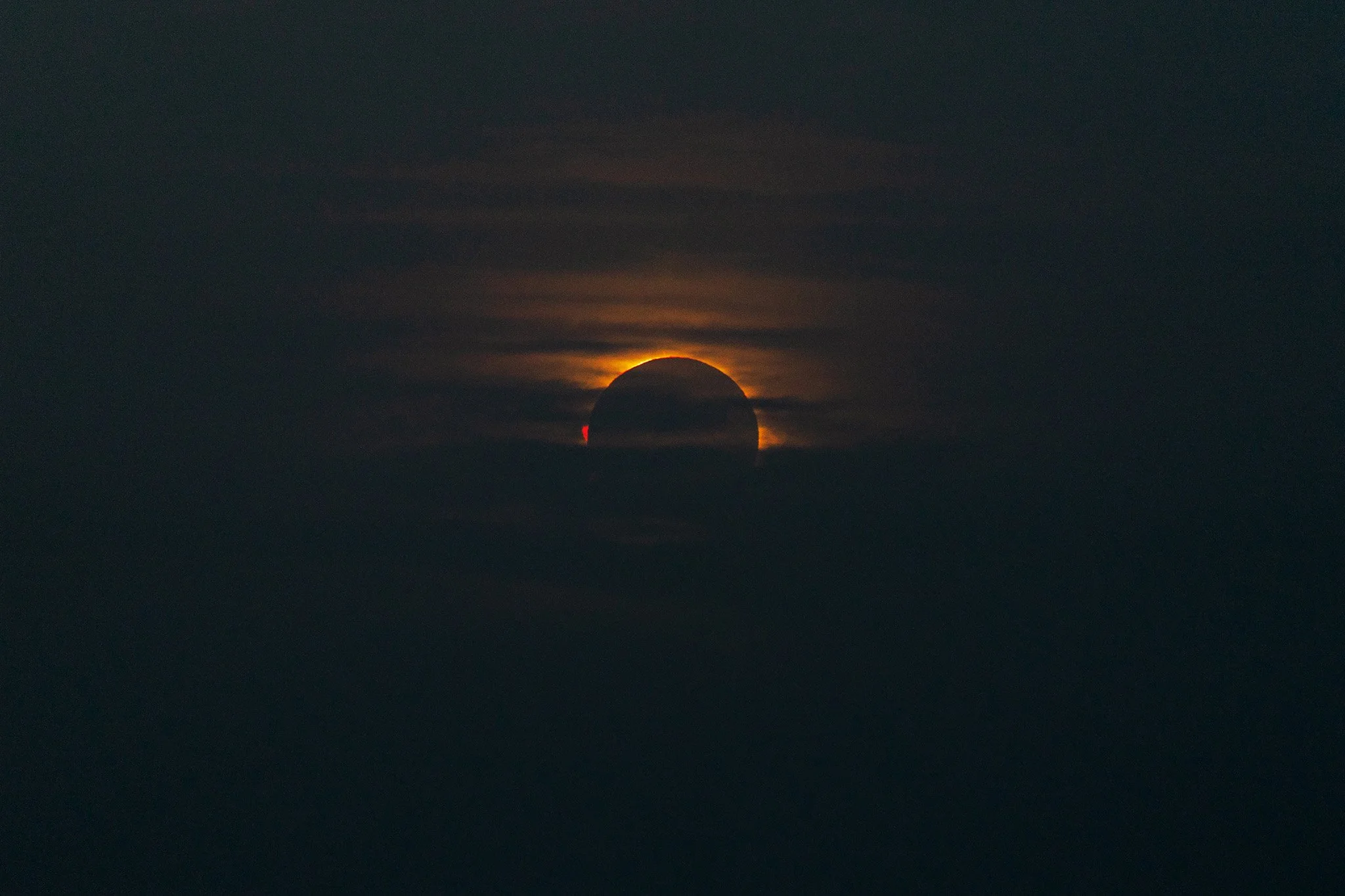
Total Solar Eclipse in Menorca, Spain | Sony a7 II + 100-400mm GM @ 400mm, f/5.6, ISO 400, 1/8 sec
I traveled to Menorca, Spain with my mom last month to see the 2026 total solar eclipse. The temperature dropped and the wind picked up a bit as it grew closer to totality. Unfortunately, some clouds formed near the horizon, and totality occurred just as the eclipse was passing behind these clouds. During totality, it was crazy to see a big portion of the sky was just dark, but sadly, the clouds blocked us from seeing the sun’s corona. This is the photo that I captured during the beginning of totality. It was still cool that I was able to capture the outline of the eclipse and the little bit of sunlight shining through the clouds, but I was most happy to see that I captured a bright pink solar prominence on the left side of the eclipse.
I calculated that the size of this solar prominence stretched about 4 Earth diameters off the surface of the sun. That is a crazy scale to think about. To calculate this, I simply measured the number of pixels in my photo for the height of the solar prominence and the diameter of the sun. Then, I did some arithmetic with the known diameters of the Earth and sun.
Previously, I loved the experience of seeing and photographing the 2024 total solar eclipse as it passed across the United States. Of course, I wanted to see a total solar eclipse again, but why did I want to see this one specifically? Even though total solar eclipses happen on average every 1.5 years somewhere on Earth, they are rare because the path of totality only intersects a very small portion of Earth. And within that small pathway, it is even more rare that you can stand somewhere on land with the eclipse happening so low on the horizon. Compared to the 2024 eclipse that I saw during the middle of the day, this eclipse could be seen just before sunset. I was excited because that would also give me a possibility to compose a photo of the eclipse with a foreground object and then see the partial eclipse set into the water. Thus, I decided that I wanted to go to the Balearic Island of Menorca.
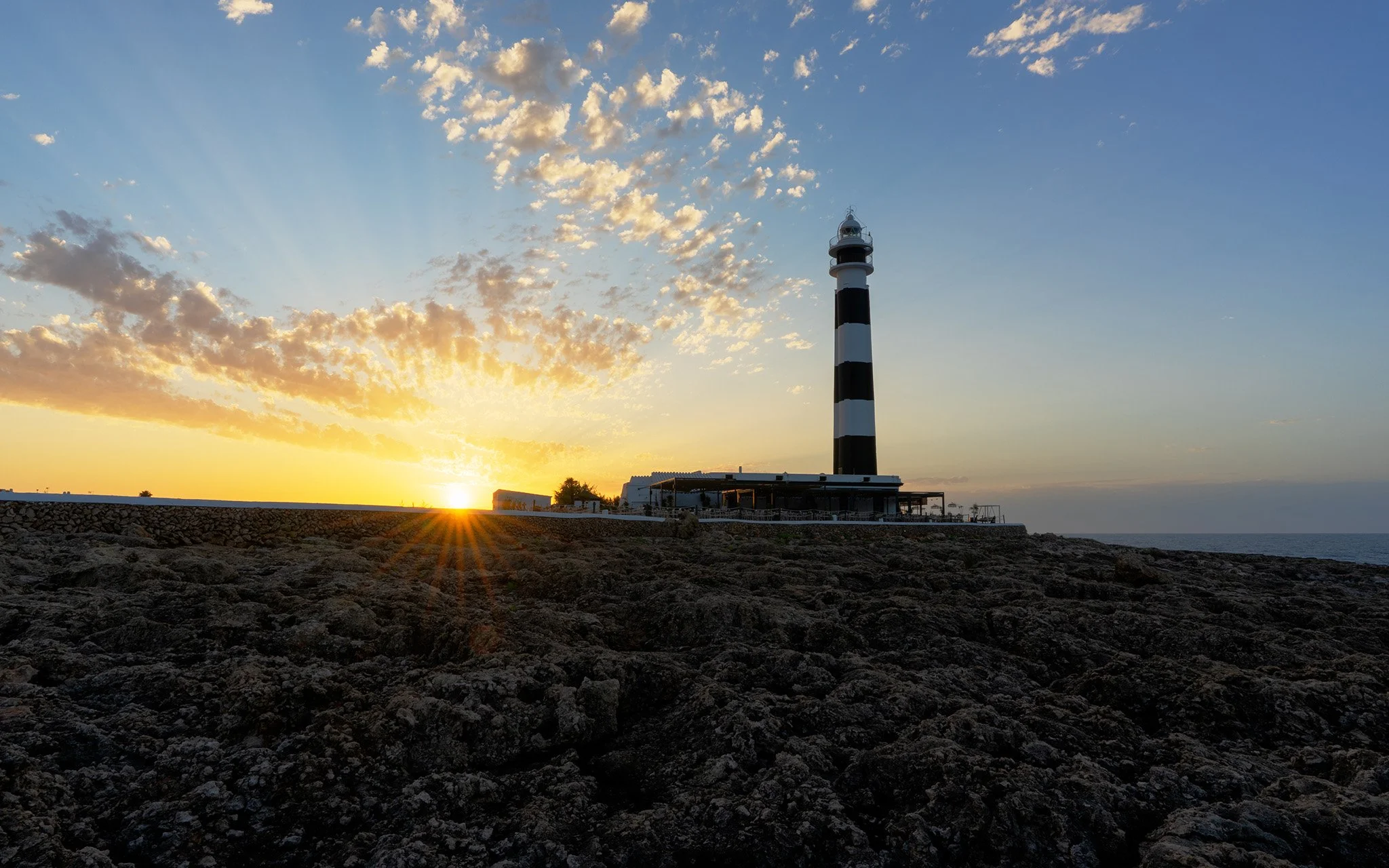
Sunrise at Cap d'Artrutx Lighthouse
During our time exploring Menorca, we visited four different lighthouses. On the day before the eclipse, we visited the Cap d’Artrutx Lighthouse on the southwest coast of the island and were treated to a surprisingly nice sunrise. With the eclipse happening so low on the horizon, a lighthouse would be a perfect subject to compose a photo with; however, there were not any spots where we could stand on land and be in line with the eclipse and a lighthouse. I decided not to stress trying to plan a perfectly composed photo and just make sure that we could enjoy the eclipse. Thus, we settled on staying near our hotel on the west coast of the island and walking to the cliff’s edge to see the eclipse over the Mediterranean Sea. After the eclipse, I saw photos taken by a couple of other photographers who got on a boat so they could line themselves up with a lighthouse. I did not think about that idea, but I am okay that I did not have to deal with the stress involved in doing that.
A time-lapse of the partial eclipse | Sony a7 II + 1.4x teleconverter + 100-400mm GM @ 560mm, f/8, ISO 320 - 1000, 1/200 sec
This total solar eclipse I experienced was the opposite of what I experienced for the 2024 total solar eclipse. In 2024, we spent our time looking at the weather forecast and driving to try to avoid the clouds. Eventually, we had to pick a spot and pray that the clouds would clear. For this eclipse, we were on an island without anywhere to go if there was bad weather. The skies were clear on the day of the eclipse, and it looked we would be in for a good show. I was able to take my time and set up my camera before first contact. I was excited that I could see first contact so clearly and that I was able to take this time-lapse showing the progression of the partial solar eclipse leading up to totality. This time-lapse shows a sped-up version of what we witnessed, but I still felt like the sun was being eclipsed very quickly. I constantly had to pan and tilt my camera between pictures to keep the sun within the frame of my photo.
I enjoyed editing this time-lapse of the partial eclipse, and it was something I did not get to do last time. The time-lapse did provide a challenge which required a few rounds of tracking and stabilizing it in Adobe After Effects so that the eclipsed sun would not appear to be jumping around in the video.
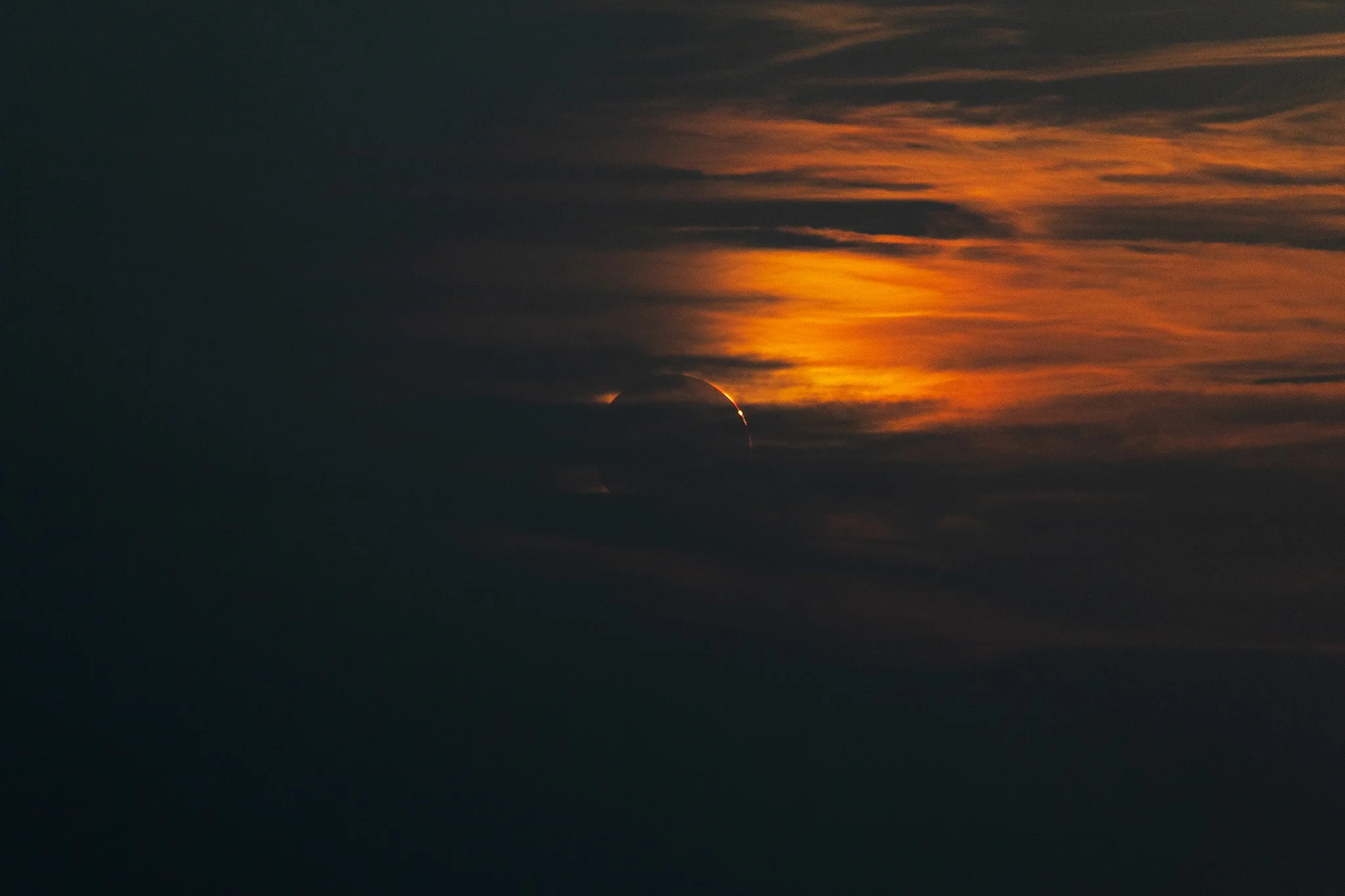
Total Solar Eclipse in Menorca, Spain | Sony a7 II + 100-400mm GM @ 400mm, f/5.6, ISO 500, 1/8 sec
In 2024, the clouds magically cleared in the nick of time, and we were treated to an amazing, clear view for the duration of totality before the clouds covered the sky once again. This time, the eclipse passed behind a band of clouds during totality. Since it was too dark with the presence of clouds, I removed the solar filter from my lens about five minutes before second contact. During totality, we could not see the sun’s corona, but we could see the large section of sky that was in the shadow of the moon. I took this photo at the end of totality, and you can see the illuminated clouds on the top right side while the ones on the left side remained in the dark. As a consolation prize, it was cool to the sunlight shining through the clouds being painted away from right to left as the shadow of the moon passed across the sky. I wish I had tried getting a wider field of view at the second or third contact points since you could see a distinct line in the clouds between the light and dark sides; however, I did not have the mental capacity to process what I was seeing and to think about composing another photo.
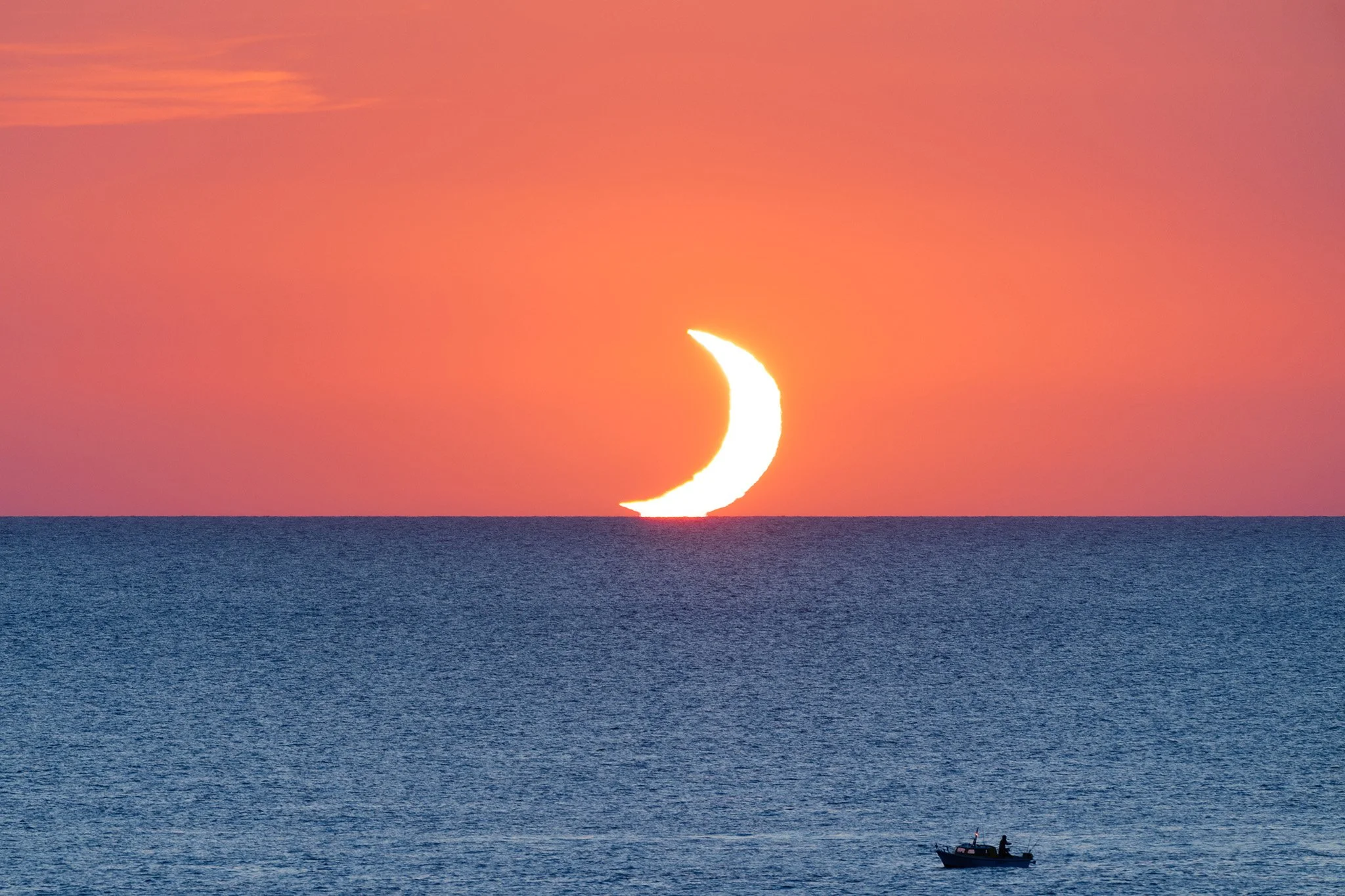
Partial Solar Eclipse setting into the Mediterranean Sea | Sony a7 II + 1.4x teleconverter + 100-400mm GM @ 560mm, f/8, ISO 100, 1/25 sec
After totality, the eclipse dipped below the clouds, and we had a clear view again. I did not need a solar filter anymore since the sunlight was passing through a lot more atmosphere. Additionally, I was metering my photo for the foreground rather than the just sun. I quite like this composition as the partial eclipse is just touching the horizon, and I think the small boat adds a nice context to the photo and anchors the photo well. There were a decent number of boats at sea during the eclipse, so I was happy that I was able to isolate a single boat and the partial eclipse in this photo. If you look at this photo closely, I thought it was interesting how the crescent sun seems to get stretched at the horizon.
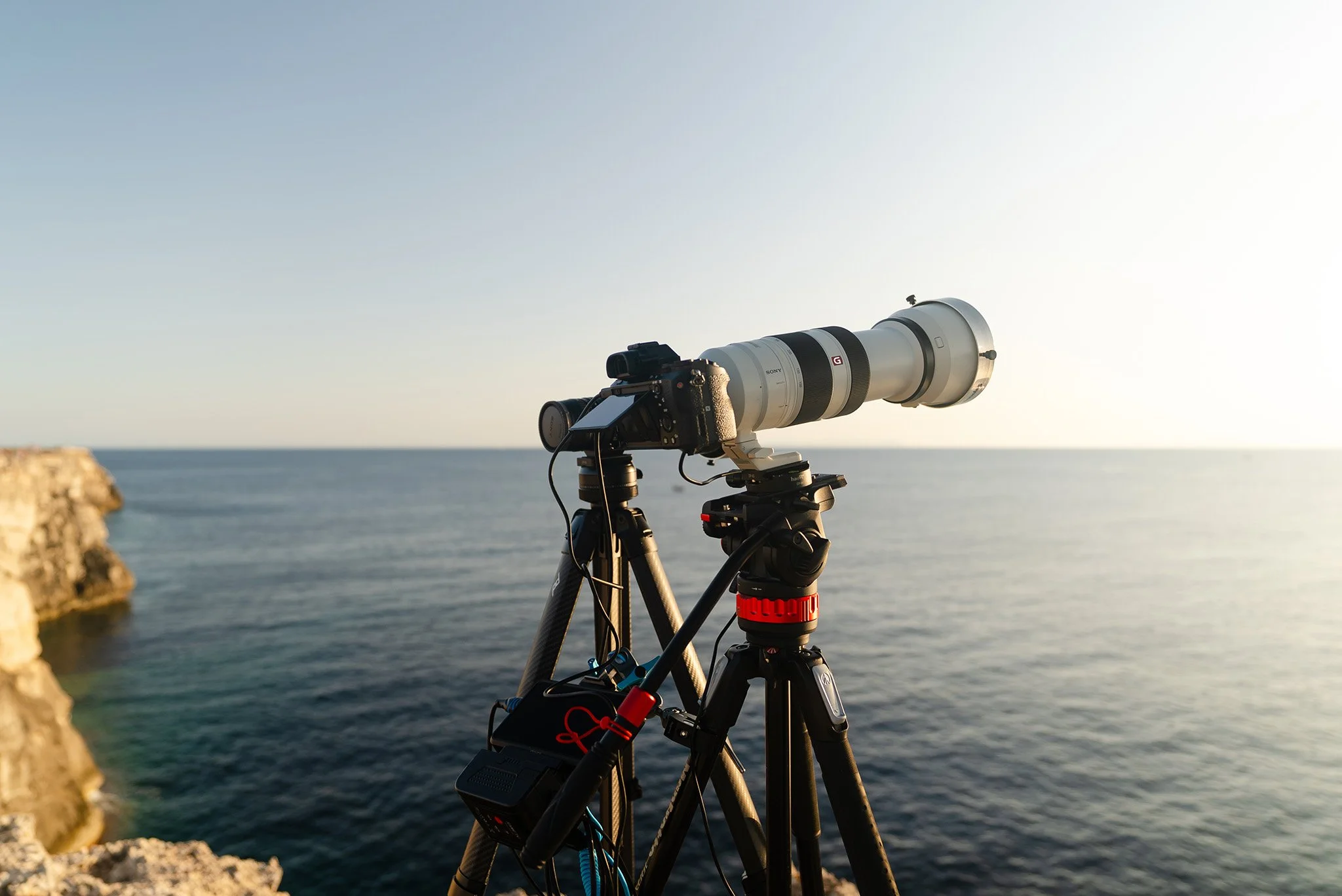
My camera setup for the total solar eclipse
This was my camera setup for the eclipse which had some similarities to my camera setup that I used for the last eclipse. I used an external monitor so I could check my focus more accurately, and I used a large external battery to power my camera and monitor. Additionally, I mounted my solar filter on my lens hood so that I could quickly take it off for totality without worrying about unscrewing anything. Unlike last time, I did not rent a longer lens as I did not want to worry about the cost or logistics of it in a foreign country. Instead, I decided that my 100-400mm lens with the option of using a 1.4x teleconverter would be good enough especially as I thought I wanted to try a wider field of view to include a foreground object in my photo. Also, I had a second tripod for another camera which I used to record a video of the eclipse during totality.
Just like the last eclipse, I hoped to use my 42MP Sony a7R II since it has the highest resolution of the cameras I own; however, I stopped using this camera last year because the d-pad buttons and control wheel were broken. When preparing for this trip, I figured out how to control all the settings without using those broken buttons. Unfortunately, after I landed in Menorca and went to test out my camera, the center button also stopped working. My last hope to use this camera for the eclipse was to control the settings with my laptop; however, the USB mode on my camera was not set in the correct mode to do that, and I could not change the setting. That was a bit frustrating. When I got back home and was unpacking, I decided to test my camera once again. To my surprise, the center button worked again.
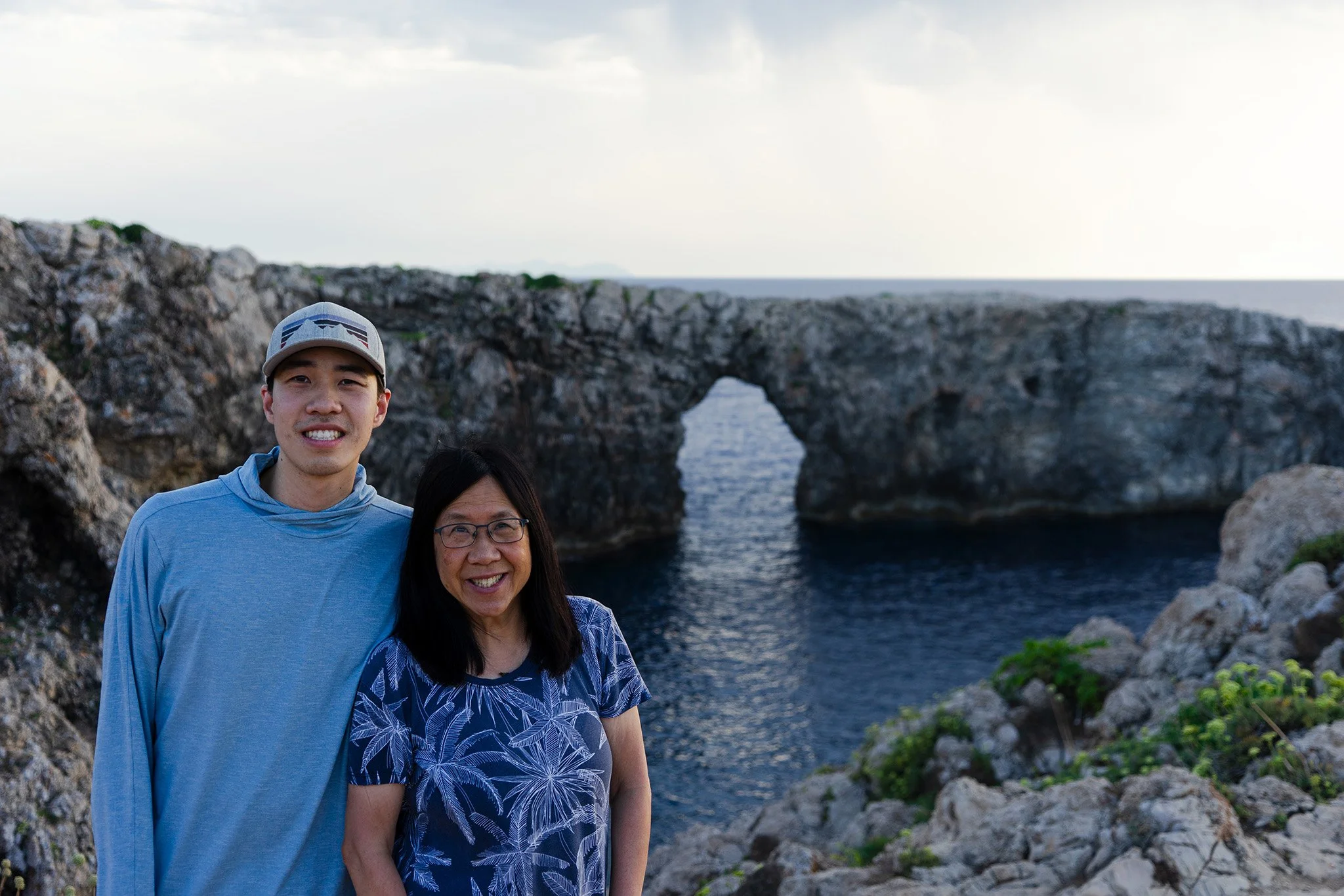
My mom and I in Menorca, Spain
Even though the clouds that obscured the sun’s corona and I could not use my broken camera, I still had an enjoyable time witnessing this total solar eclipse in Menorca with my mom and I was still able to take my photos with my backup camera. And even though I did not find the perfect composition with a foreground subject, I still enjoyed taking and editing my photos. But most of all, I am glad to have shared this experience of a lifetime with my mom. Additionally, it was enjoyable to meet people from around the world and hear their experiences, expectations, and excitement for this total solar eclipse. Despite the unexpected problems, I would do it again if given the chance. Although, a little less cloud would have been nice.